
Tangible User Interface: Origins, Development, and Future Trends
Haipeng Mi, Meng Wang, Qiuyu Lu, Yingqing Xu. SCIENTIA SINICA Informationis, 48(4), 390-405, 2018. PDF
Abstract: The physical user interface is a new paradigm of human-computer interaction. Through the coupling of physical objects and digital information, the physical user interface enables users to operate digital information through natural operation methods such as grasping, moving, and assembling. Combined with emerging technologies such as electromechanical drive, the physical user interface can also produce physical feedback in the real world by means of autonomous movement and shape change. In various fields, including information visualization, daily office work, education and entertainment, as well as supporting creative creation, the physical user interface has great application potential. This paper provides a detailed review of the research and development of the physical user interface, introducing its origin and development, theoretical framework, implementation technologies, and application fields, and also looks forward to the future development trends of this research field.
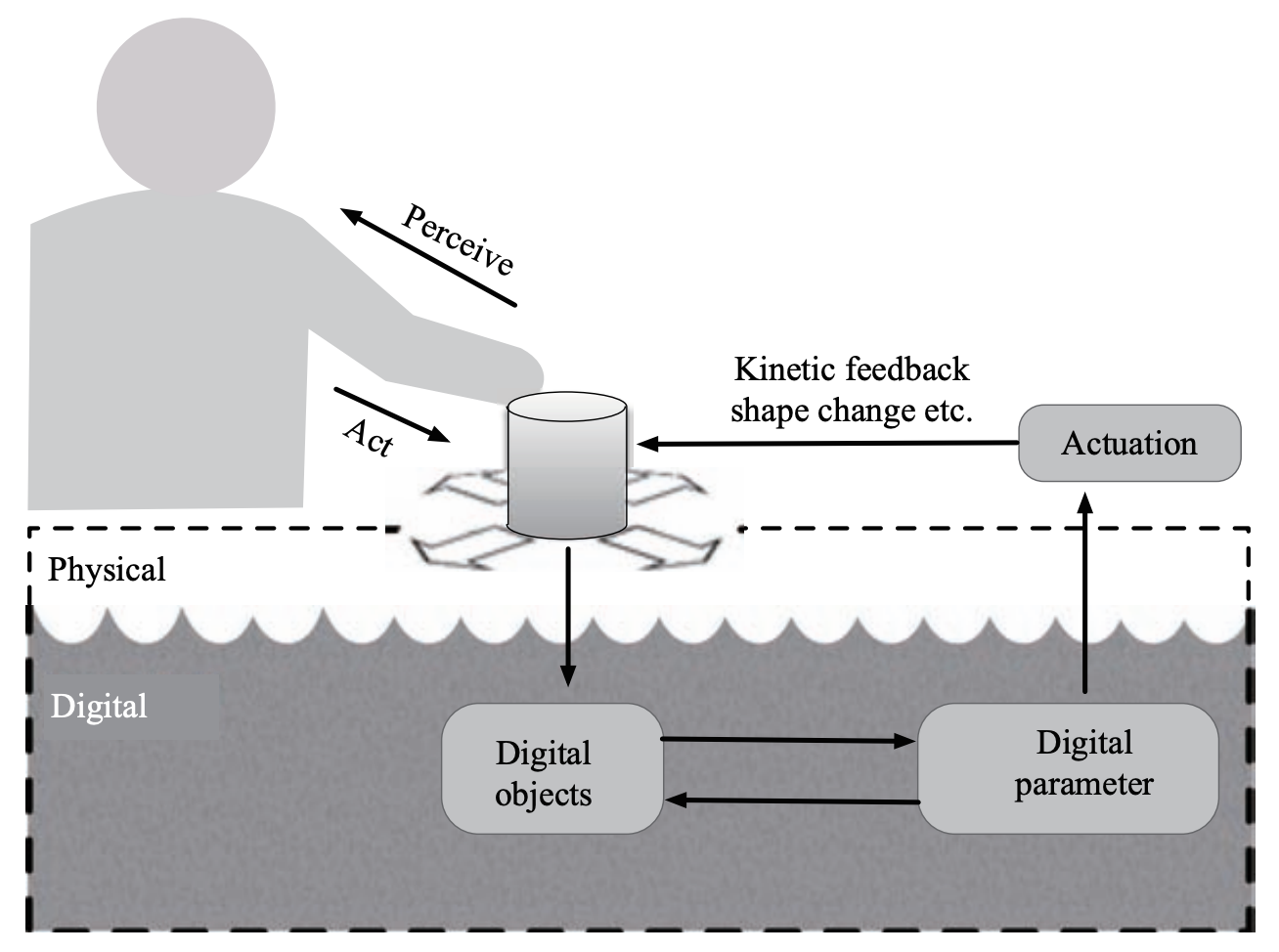
ATUI model