
Ecological HCI: Reflection and Future
Abstract: In light of the HCI community’s growing alignment with Sustainable HCI (SHCI) and the awareness of its currently narrow focus. We propose Ecological HCI (EHCI). EHCI highlights emerging, nature-centric research efforts and aims to expand SHCI’s scope to encompass a broader range of Sustainable Development Goals set by the United Nations [16]. It focuses on understanding the complex interplay between technology, human activities, and the natural environment, and redefining HCI’s role in promoting ecological well-being. This special interest group will gather researchers to discuss key questions in EHCI’s development, focusing on refining its vision, positioning within HCI, technical approaches, design strategies, evaluation methods and long-term impact.
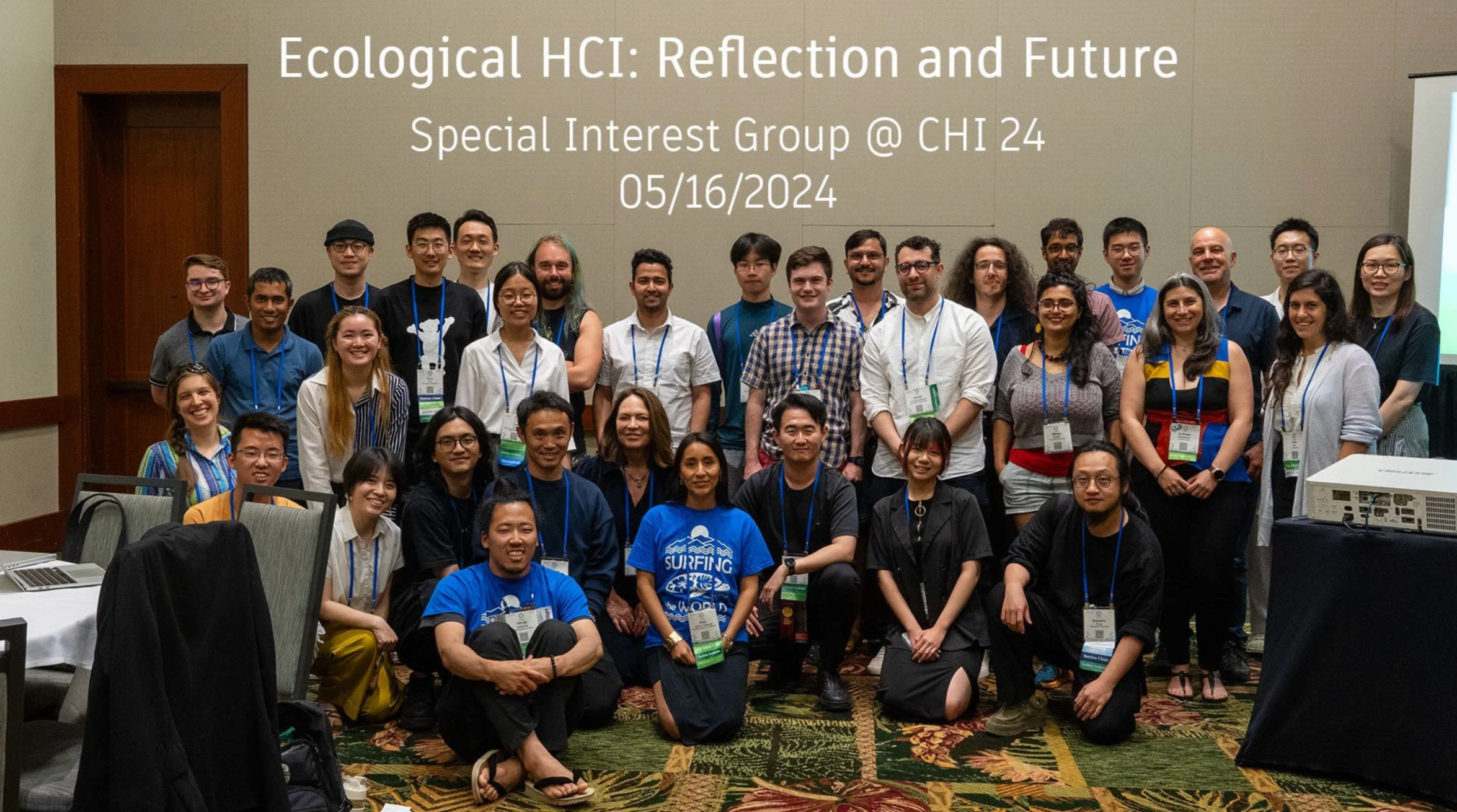
Thank you for attending our special interest group. This event wouldn't have been possible without all our amazing attendees. We have summarized the discussion outcomes: EHCI Summary (Website Version)
The HCI community's engagement with Sustainable HCI (SHCI) has predominantly centered on Responsible Consumption and Production, reflecting a narrow scope given the United Nations' Sustainable Development Goals (SDGs) cover 17 categories. This focus suggests that the breadth of Sustainable HCI research over the past decade has been limited [Hansson et al., 2021].
However, recent advancements in technology for environmental energy harnessing, condition monitoring, adaptation to changes, conservation, and restoration indicate a broadening of SHCI towards fulfilling other SDGs like Affordable and Clean Energy, Climate Action, Life Below Water/On Land, etc.
We introduce "Ecological" HCI (EHCI) to expand SHCI's scope. EHCI aims to create interactive technologies that are aware of and integrated with ecological systems and principles, moving beyond human-centered designs to include environmental and more-than-human considerations. This approach broadens HCI research to encompass a wider range of ecological interactions and stakeholders.
This special interest group will gather researchers to discuss key questions in EHCI's development, focusing on refining its vision, positioning within HCI, technical approaches, design strategies, evaluation methods and long-term impact. Addressing these questions is essential to advance EHCI and bring new researchers into this domain while ensuring it effectively contributes to both human progress and ecological well-being.